Sunscreen
Sunscreen for oily, acne-prone skin: enough product every morning
Skipping SPF because it feels heavy, white, or ‘breakout-y’ is usually texture and amount — not ‘oily skin doesn’t need sun’. This page is about a habit you can keep. DaDiary is in Beta: tips, not a diagnosis.

No account needed first. See the routine, then save it.
What SPF does — and does not do
Sunscreen lowers how much UV skin takes in. It does not treat acne, erase a mark in a week, or replace a hat.
For marks after spots, even morning wear is a cheap habit that helps them stay lighter.
Weekly check-in photos are easier to read when afternoon sun isn’t recoloring skin. That’s why we mention SPF — not to sell a tube.
A window still counts
Sitting against glass all morning, UV still arrives. A phone screen is not the sun.
SPF 30 worn well beats SPF 50 dabbed on
The number assumes enough product. About two fingers for the face. A smear too thin makes the label meaningless.
Midday: blot, don’t wash and go bare
Shine in a meeting: blot, then powder or a spray with SPF if you brought it. Washing at noon and walking into sun marks more easily than a thin layer you can feel — see the office oily-skin guide.
Enough product, every zone
Split forehead, cheeks, nose, chin — then the front of the ears and the neck.

- Thin moisturizer first if you need it, then SPF.
- Makeup after SPF, sheered out.
- An ‘SPF cushion’ rarely replaces a real layer if you sheer it out.
Textures oily / acne-prone skin often tolerate
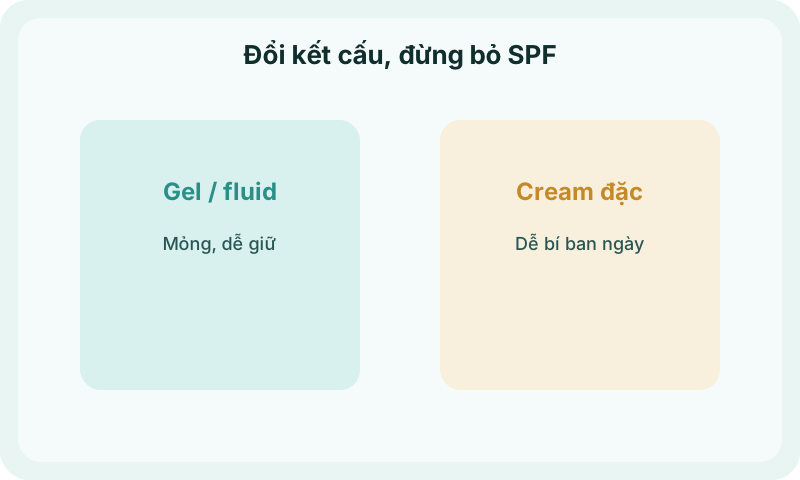
Gels, fluids, milks, or oil-control labels usually beat a thick cream. ‘Non-greasy’ on the pack is not a guarantee — patch-test if you react easily.
Do this / skip this
One heavy day is not a reason to drop the habit. Change texture first.

Do this
- Two fingers every morning, neck too.
- Long outdoor time / heavy sweat: blot, reapply when you can.
- Night: wash SPF off. Don’t sleep in a full day’s layer.
- New product: patch-test 2–3 days.
Skip this
- Dabbing it like moisturizer.
- Only wearing it at the beach.
- Washing at midday ‘to breathe’, then forgetting to reapply.
- Dropping SPF because one formula felt heavy.
Checklist to actually keep SPF
Give a formula two weeks before you call it a mismatch.
- Morning: cleanse or water → thin moisturizer if needed → two-finger SPF.
- Office windows or lunch outside: still wear it in the morning.
- On a bike: helmet and mask do not replace cream where cloth does not sit.
- Rainy days with outdoor stretches: keep the morning step.
- Lasting sting, swelling, blisters: stop, wash, see a doctor — that is not skin ‘getting used to it’.
When to ask a doctor
A sunscreen reaction is not a ‘push through a few more days’ project.
- Rash, swelling, lasting burn, blisters, trouble breathing — stop, see a clinician.
- A sudden breakout after a new formula: stop that product. Don’t put acids on skin that just reacted.
A routine with sun care — then a photo
A photo-based suggestion should include morning SPF. Take one picture, see the routine, sign up when you want to save it. Even wear for a few weeks beats an expensive tube used twice.
FAQ
- Can sunscreen cause breakouts?
- Some formulas clog oily skin. Switch to a thinner texture, use the right amount, wash it off at night. Don’t drop SPF entirely — marks fade slower without it.
- Do I need it in an office?
- Yes if you sit by a window or go out at lunch. Morning SPF is a simple habit that protects fading marks.
- Chemical or mineral — which is ‘right’?
- Both count when you apply enough. Pick what you will wear every morning. Patch-test. There is no single winner for every oily face in Vietnam.
- Should children or someone on prescription cream copy this?
- Don’t decide for them from this page. Ask a clinician or pharmacist. This guide is for adults building an SPF habit — not a substitute for a label or prescription.
No account needed first. See the routine, then save it.
DaDiary offers reference tips, not a dermatologist visit. Pain, pus, spreading swelling — see a clinician.